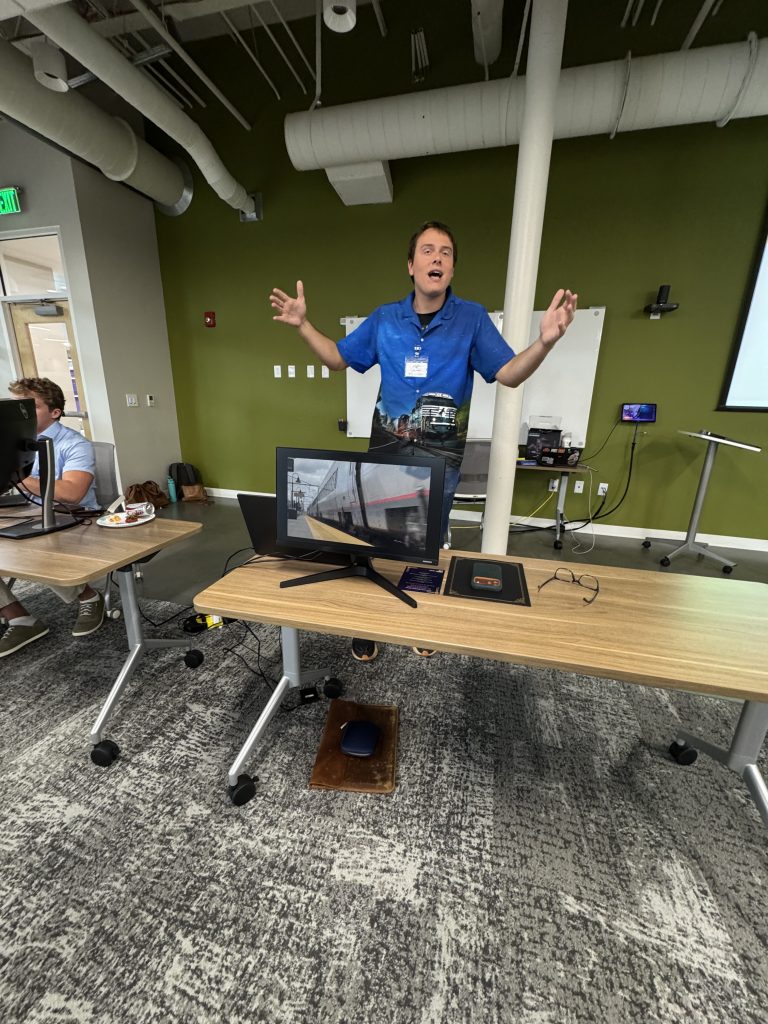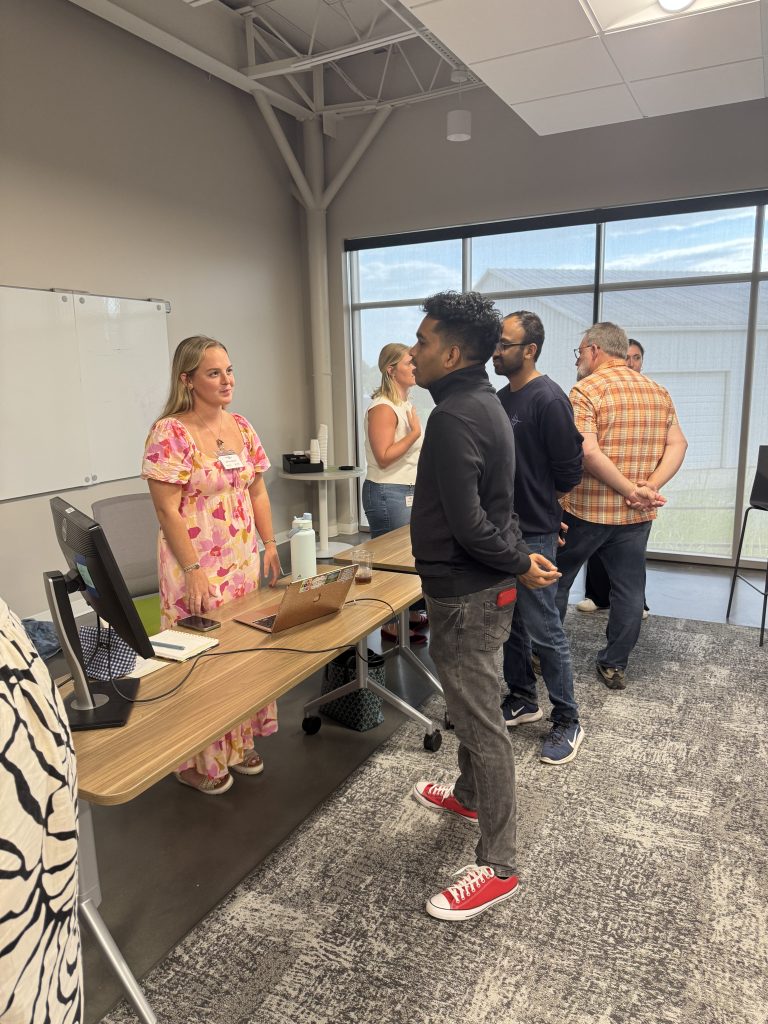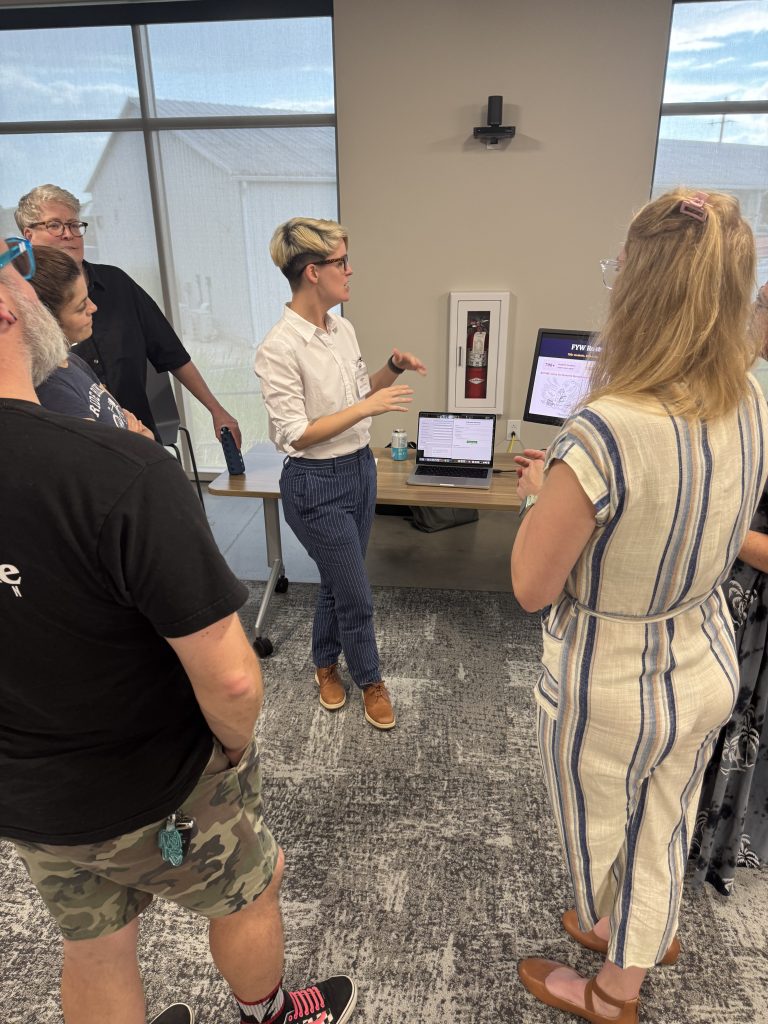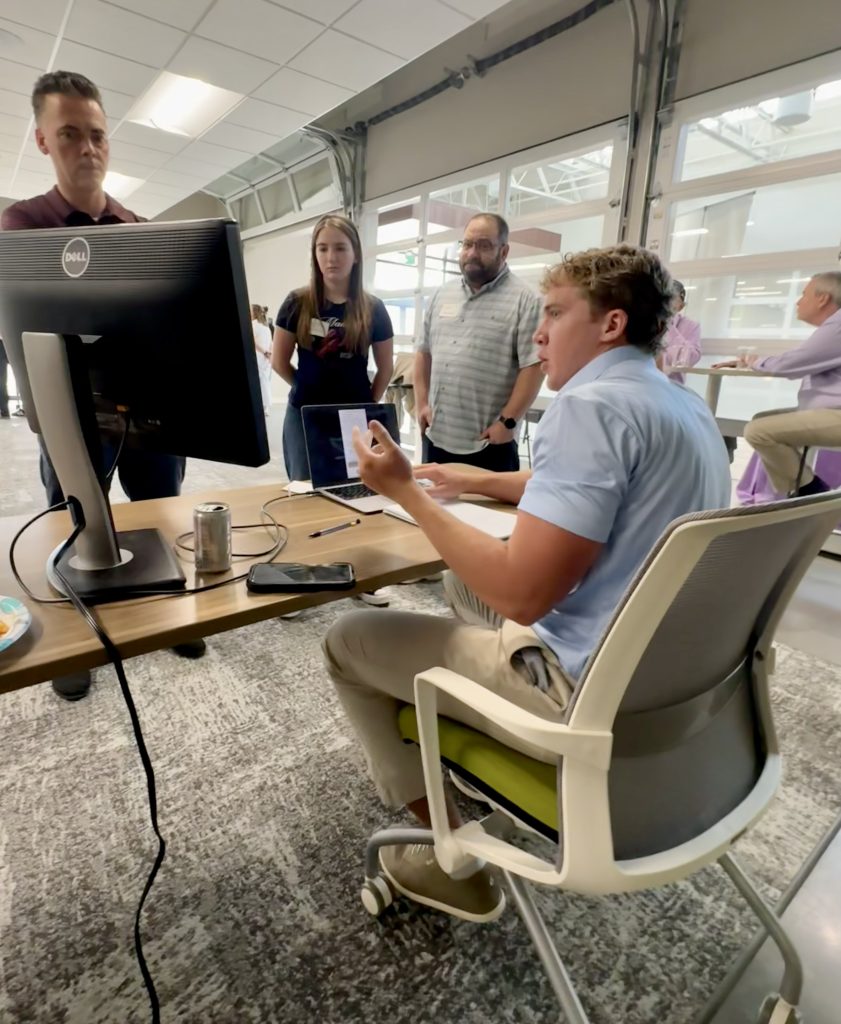
A financial controller built a purchasing chatbot. A mom who got stranded after a soccer game built a car care app. A GIS guy built a tool that answers zoning questions in plain English. None of them would call themselves developers.
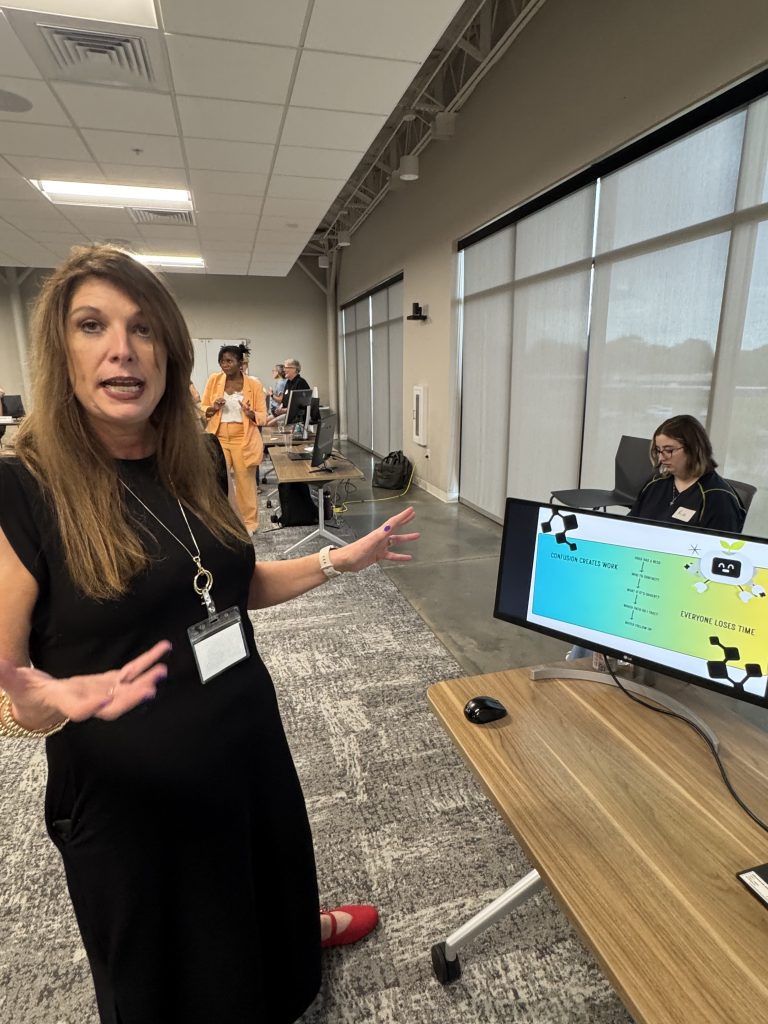
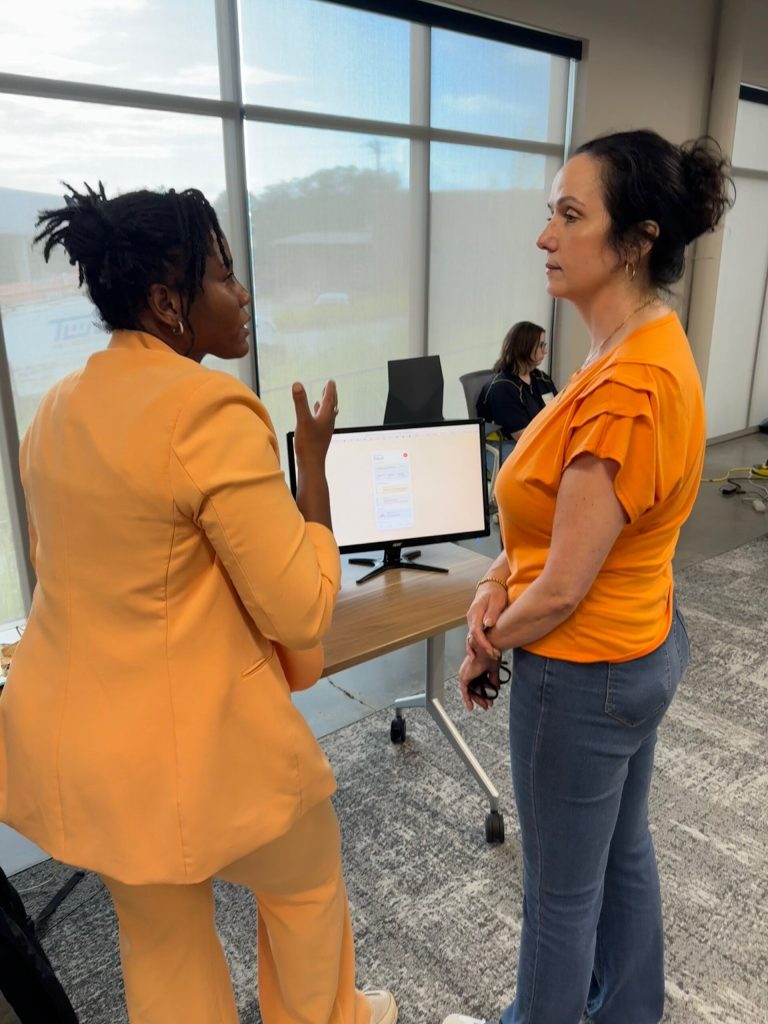
All three were among 12 projects on 12 tables at the AI Innovation Showcase at Flywheel Coworking on July 22. Eight weeks earlier, none of them had built anything with AI, now they can field questions from a crowd.
Inside Furman’s Applied AI pilot
The projects came out of Applied AI for Professional Practice, a pilot certificate course from Furman University’s graduate studies program and its Center for Innovative Leadership, taught in partnership with Build Carolina, the nonprofit focused on tech talent development across South Carolina. The course ran June through July, hybrid format, with in-person sessions at Flywheel. Graduate students could take it as an elective toward Furman’s Master of Science in Innovation and Leadership. Community members could take it as a standalone certificate.
Lelia King, Build Carolina’s CEO, taught the course and opened the showcase with framing that made the whole thing work. When students started, they didn’t ask what AI can do.
“That’s the wrong question,” she told the crowd. “Instead, they started with a much better question: What problem is worth solving?”
That distinction sounds small. It is the entire course. Every project in the room started with a specific, annoying, expensive problem someone had lived with at work or at home, then worked backward to where AI could help, where it could not, and where human judgment had to stay in the loop.
What that looks like in practice
Sara Davis, a financial controller who oversees purchasing across the Americas for the company she works for, built Penny, an internal chatbot that walks employees through purchasing policy. Her company has rules for buying everything from equipment to event services. Most employees don’t know them. Penny points people down the right path, flags a human buyer when someone tries to purchase outside the preferred method, links out to a SharePoint site so guidance stays current, and logs every question for audit and training purposes. Her one-line summary of the whole build: AI should not replace judgment. It should reduce confusion.
Michella Stowers built Happy Car after her starter died in a parking lot following her daughters’ soccer game and she spent an hour asking strangers for a jump start that was never going to fix it. The app tracks maintenance by VIN, flags recalls, decodes warning lights for your specific vehicle and includes Sparky, an AI assistant that listens to a recording of the noise your car is making and tells you what it probably is. Anything under a 75% confidence rating gets sent to a mechanic. You can also photograph a repair quote and have it checked against local pricing data pulled from NHTSA and OBD-II databases. That way you know whether you’re being overcharged.
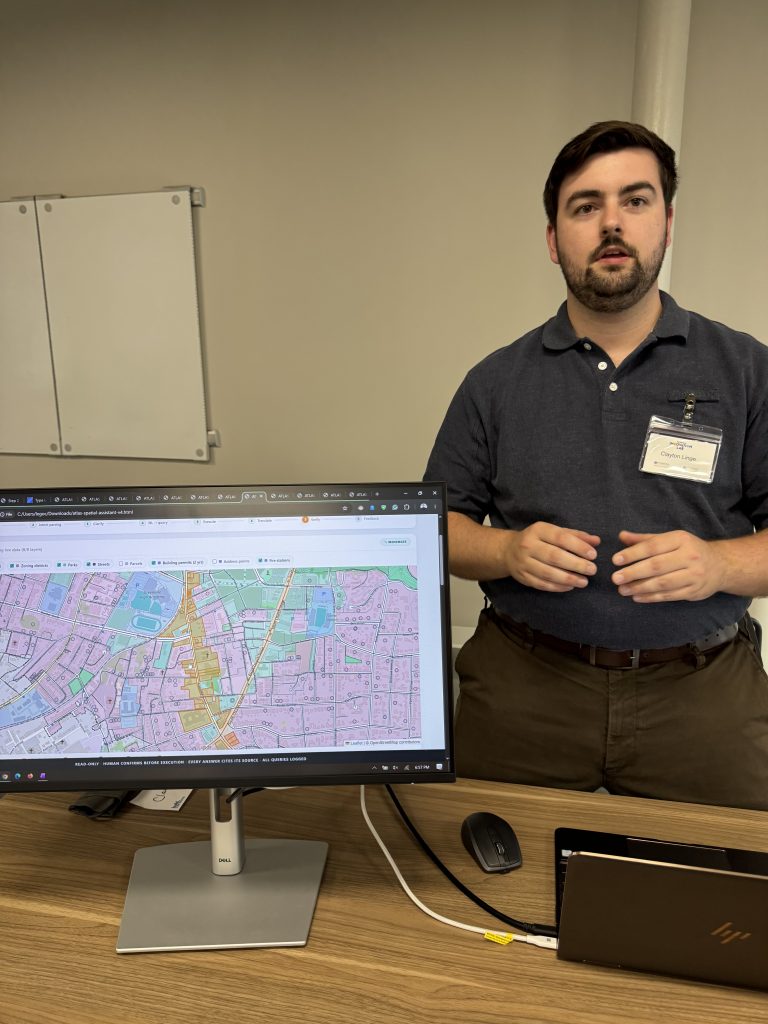
Clayton Linge built Atlas, a spatial assistant that lets non-technical staff ask questions of city GIS data in plain English. Put in, “Show me every street with a condition report below 50. Show me every parcel on Augusta Street valued above $500,000, and answers come back as interactive maps and exportable tables, read-only, with guardrails that reject questions outside its scope. Work that used to require a GIS analyst and a week of turnaround happens in a conversation. He designed it to sit on top of any municipality’s existing database, and it runs offline for field inspections.
The timing for Furman’s pilot is not an accident
Microsoft and LinkedIn’s Work Trend Index found that 66% of business leaders would not hire someone without AI skills, and 71% would rather hire a less experienced candidate with AI skills than a more experienced one without them. Janna Pennington, who directs Furman’s Master of Science in Innovation and Leadership program, cited that research as part of the case for building the course in the first place. Employers want these skills. Almost nobody has them yet.
Pennington said a young person with AI skills now holds something that someone with 25 years of experience may not have. “You don’t have experience, but you’ve got AI skills,” said Pennington. “Now you actually have something that people with a lot of professional experience don’t have.”
King’s point at the showcase went further than hiring. Communities do not become more innovative because new technology arrives, she said. They become more innovative because more people believe they are capable of solving meaningful problems. Twelve people in Greenville now see their work differently than they did in May. The question is what happens when it’s a few hundred.
If you want to see whether the course runs again, or take it yourself, details are on Furman’s Innovation Lab site.
The conversation continues in September
The gap between what employers want and what education is producing is exactly what i4Series is taking on this fall. We’re planning an innovation in education event in conjunction with Tech Week Greenville in September. We’ll dig into how schools, universities and employers can continue to close that gap.
Sign up for the i4Series newsletter to get the date when it’s announced.
*no spam | 1-2 per month
Cherish Benton attended the AI Innovation Showcase on July 22 and interviewed course instructors and students for this article.